

Changes to Equipment Rules in IDPA
For the most part, I think IDPA’s equipment rules are fine. The divisions are a little confusing, certainly less straightforward than USPSA or other gun games. However, the general allowances and prohibitions aren’t game breaking for me. That said, I think a few changes need to be made. Particularly, I think the revolver divisions needs serious modernizing.
In simple terms, you are restricted to a 6-shot revolver, minimum caliber of 38 Special, with reloads coming from speed loaders. Shooters may opt for moonclips if using a .40-caliber or larger round, effectively 40S&W or 45ACP. While 6-shot guns are the vast majority of service sized revolvers, that does cut out a large number of reasonable guns from play. Additionally, iron sights are mandated in revolver division.
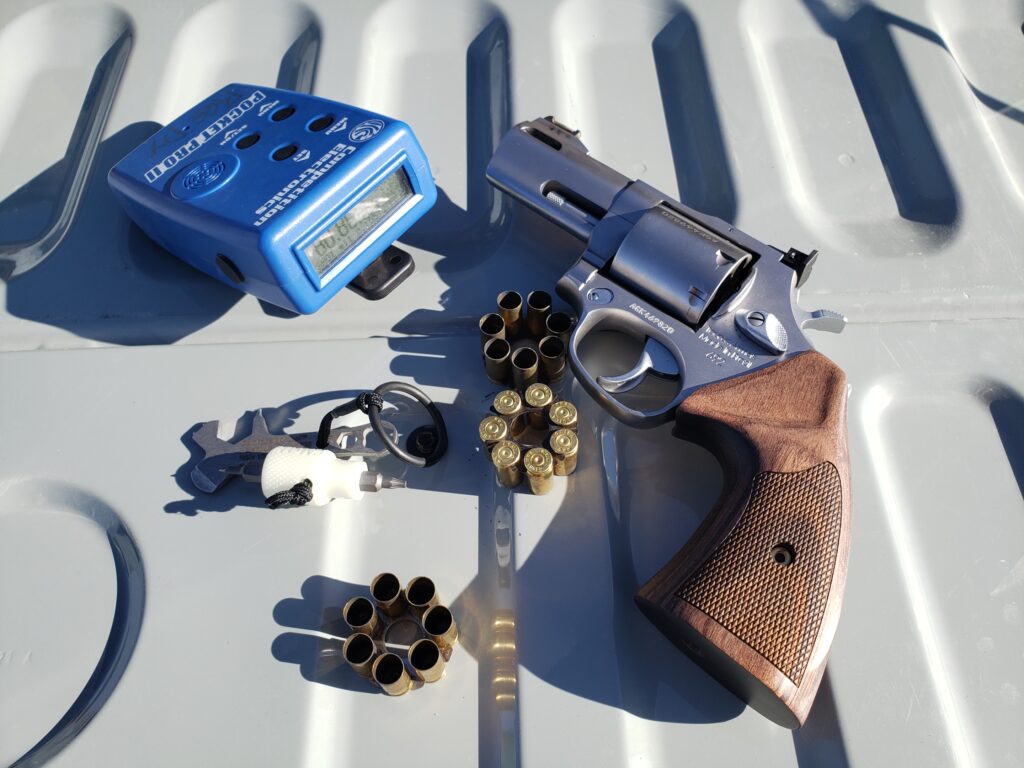
I’d love to see a new, modern revolver division added to IDPA. Allow us to use at least 7-shot guns such as the S&W 686 Plus, Taurus 692, or certain GP100 variants. If IDPA wants to avoid the 929 race, maintain barrel length limitations, and prohibit 8-shot revolvers. While there are valid carry focused 8-shooters, I’m willing to trade those away to get one more round in the cylinder (for now). Optics also should be authorized in dedicated divisions, just as we’ve seen with Carry Optics for autoloaders. Optic ready revolvers are increasingly common, with factory options from Taurus and S&W being available for some time now.
Modern Revolver Irons (MRI), and Modern Revolver Optics (MRO) would open up revolver competition options for a lot of shooters. Even making these subdivisions similar to SSR and ESR, underneath the standard REV would be a plus. Let everyone duke it out at the local levels, then shred into unique categories at higher level matches. The revolver market is changing, and it’s time for IDPA to catch up.
Increased Concealment Requirements
IDPA is known for being the concealed carry focused competition. Typically concealment is required for all stages, though there are some situations where concealment can be omitted. However there is one place where concealment is strangely absent; the IDPA 5×5 classifier. That’s right, concealment is NOT required on the classifier. The thing that is supposed to be a test of IDPA’s core skills, and the primary method of stratifying shooters, does not require concealment.
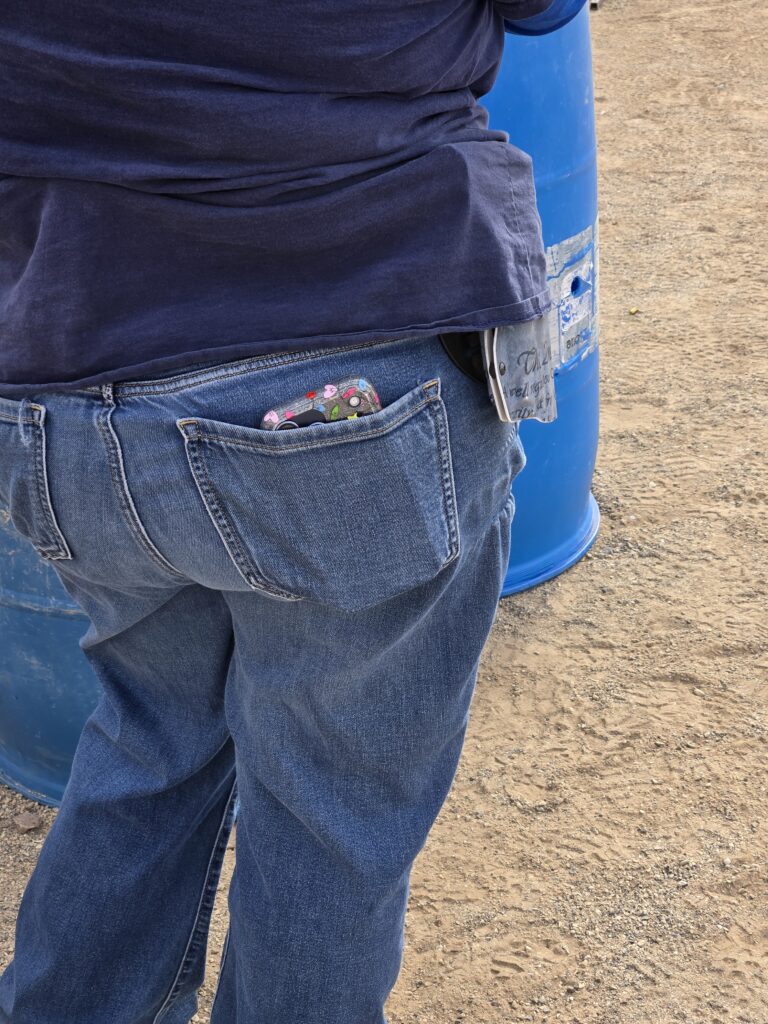
How does this make sense? I constantly see IDPA shooters criticizing USPSA and PCSL as “gamer” sports full of shooters who are not serious about personal defense. Then these same IDPA shooters peel off their cover garment when saddling up to the line during classifiers. When asked why they do this, the typical answer is because concealment could hurt their times, impede their draw, and other excuses.
That is not in the spirit of the rules, nor the game, despite being legal. To regain its legitimacy, IDPA must mandate concealment on their classifiers. Otherwise, they may as well do away with the requirement entirely.
Changes to Tactics in IDPA
Tactical Priority in IDPA Stages
Tactical Priority in simple terms is the order in which targets must be engaged. If in the open, or coming over the top of cover, targets must be engaged near-to-far. If coming around a corner, shooters must “slice the pie”, shooting targets left-to-right, or right-to-left depending on which direction they’re coming from, with no consideration of distance to target. Failure to do so results in penalties. Slicing the pie makes sense in reality and in training, but it doesn’t quite work out in IDPA.
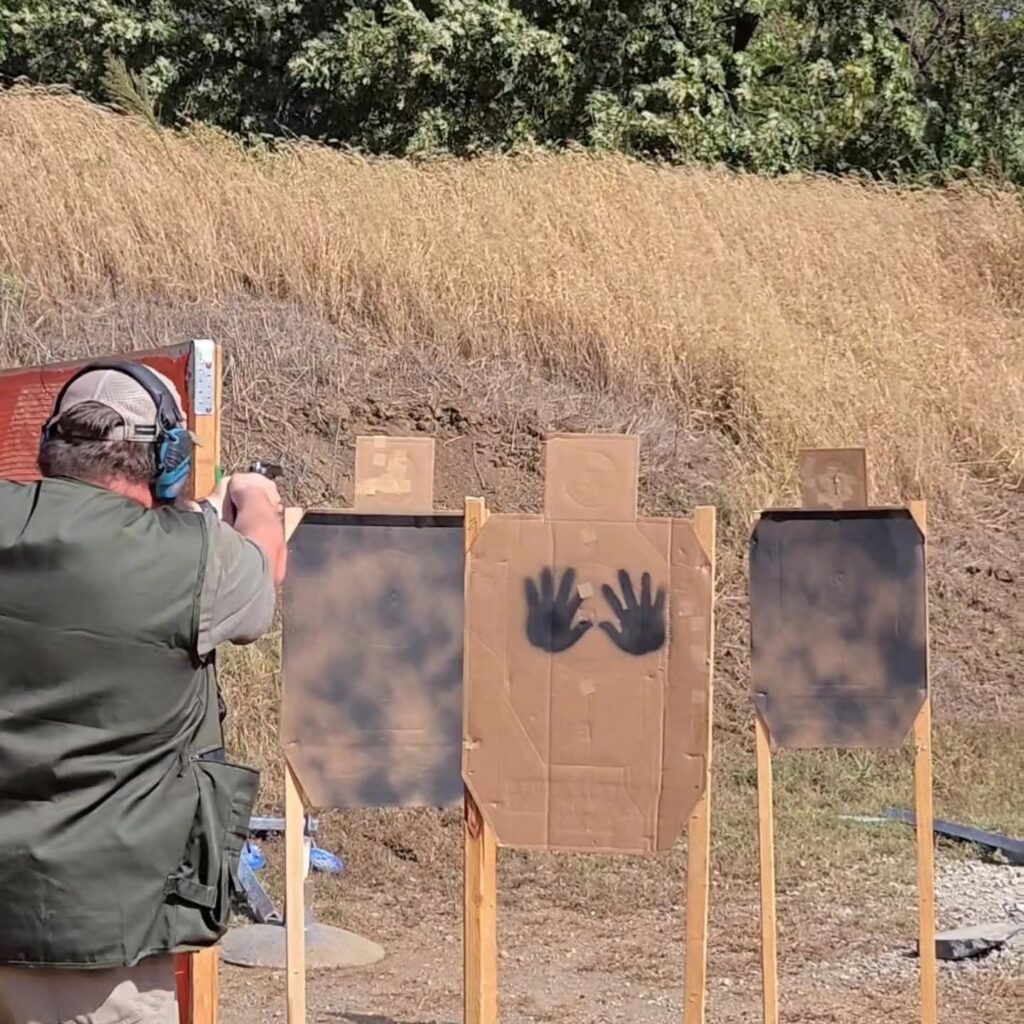
Rather than deliberately working a corner, careful to avoid overexposure, shooters typically jump out, fully exposing themselves and fully revealing all targets behind cover. Even near-to-far engagement would make more sense here, but that is simply against the rules. Other than these positional requirements, IDPA makes no indication of threat levels across targets. This could make more sense if we painted rifles, pistols, knives, and fists onto the silhouette to force prioritization, but that isn’t how IDPA works currently.
I want IDPA to transition to “Shoot them as you see them”, with no forced tactical priority other than what is in the Written Stage Brief. I’m not opposed to a handful of stages with specific directions. However, stage design should be the primary method of determining engagement order rather than a ridiculous rule.
Magazines Left on the Ground
Changes to Scoring and Stage Design
It took several matches before I learned that IDPA has restrictions on distanced moved within a stage. There are restrictions on distance between shooting positions, and overall distance traveled during a single stage. This is asinine. Rules like this are what turn away the new generation of competitors, who wish to push themselves and their performance. It’s also an easy way to prohibit real-world scenarios from being replicated in your “defensive” pistol match.
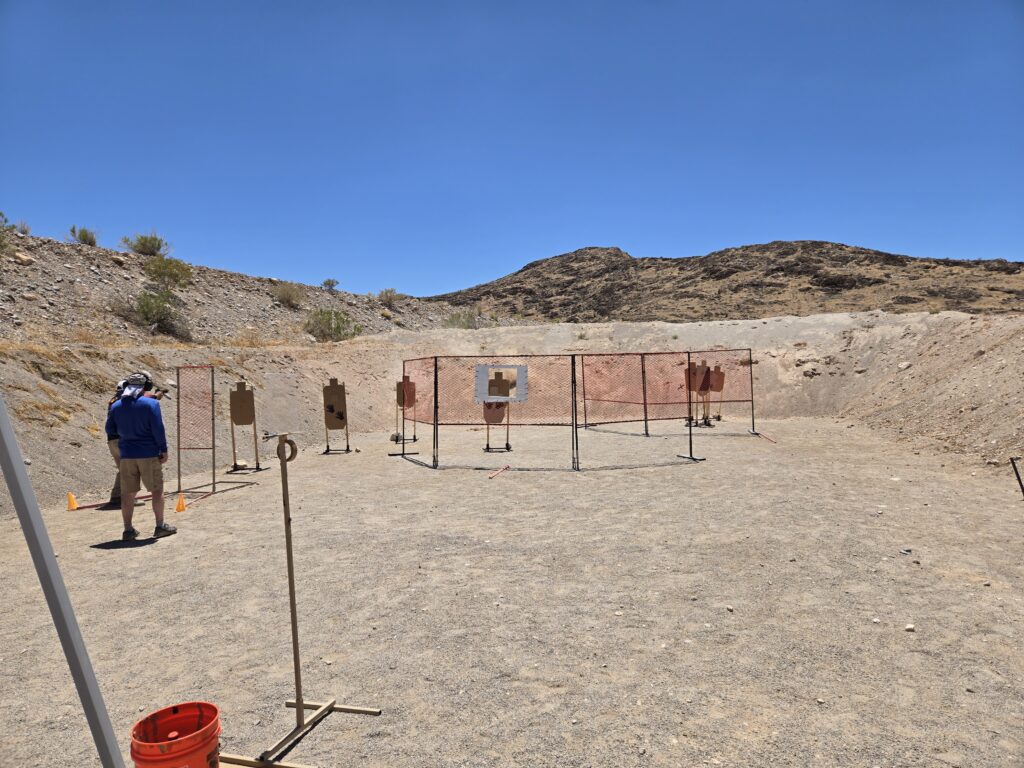
At the very least IDPA needs to increase the allowable distance moved within stages. Instead of 20 yards of overall movement, make it 40 yards. Instead of 10 yards between shooting positions, make it at least 25 yards. Finally, allow for greater than 35 yard shots on single stages. That last one was broken repeatedly after clubs hosted “Dicken Drill” stages, replicating a real-world defensive shooting back in 2022.
I understand wanting to avoid a CrossFit competition on the range. I also understand the consideration of shooters with impaired mobility. However, these changes allow for much greater flexibility when designing stages.
Things to Keep about IDPA
Scoring and IDPA Targets
I really like the Time Plus scoring format. I’d also keep the current point values on the IDPA target, although I wouldn’t be opposed to shrinking the -3 zone on the silhoutte. While I understand the benefit of Hit Factor, I really enjoy the values offered by Time Plus. Keep these as-is.
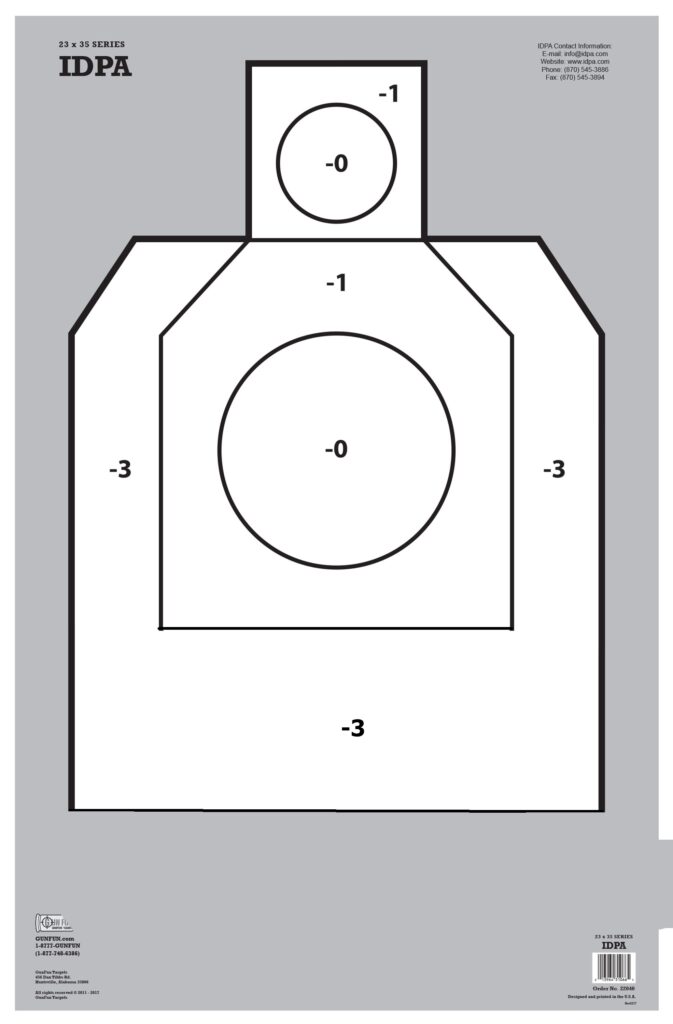
Regarding the target, I’d be open to a secondary target being approved for IDPA, similar to what we see with IPSC targets sometimes appearing in USPSA. Use the same score values, but shrink the -1 and -3 zones to force a little more precision on our shooters. These would be a supplement, rather than a replacement, and could help spice things up on the range.
Cover and Fault Lines
I spent a lot of time complaining about tactical priority. These often leads to people claiming that I want cover to be thrown out entirely. This is not the case. I like the concept of cover, and its implementation with fault lines. While I think the tactics behind these are dubious at best in a gun game, I do like the footwork that they require. These force shooters to keep awareness of their environment, and can drive some interaction with positions of cover that we don’t often get in USPSA or PCSL.
Short Stages in IDPA
IDPA is known for having short stages due to the low round counts. Keep this. Not everything needs to be a hosefest. Shorter stages keep things going, and lead to some interesting stage design to stay within our limitations. The frugal part of me also appreciates keeping local matches in the 80-100 round range, rather than 125-175 rounds that my old USPSA clubs used to average. This is an easy way to set IDPA apart from other options, and should not change.
Equipment Divisions
I’m primarily a Carry Optics and Revolver shooter in IDPA. Outside of modernization of REV, I don’t currently have many complaints about equipment requirements. I like the prohibition on race guns. Capacity restrictions are reasonable. Most of my old complaints for gear were remedied a few years ago with the allowance of AIWB, WMLs, and optics. Give us some revolver improvements, then keep the rest how it is now.
IDPA Classification System
IDPA’s classification system is straightforward and reliable. The IDPA 5×5 is a solid test of skills, and aside from the desired addition of concealment during the classifier, I really have no complaints about it. This is a unique way to classify shooters, and it seems to do a good job. Keep this as-is, with the addition of mandatory concealment and we’re golden.
Closing Thoughts on How to Improve IDPA
Overall, I enjoy my time at IDPA. It’s not my favorite gun game, but it’s also not the worst option out there. Additionally, it seems like everyone who tries to break off and improve IDPA ends up making something worse than what they started with. While I’m not opposed to new games, I am more in favor of changing what we already have. If IDPA could implement just a few of these ideas, it’d be a big improvement.
If you’re like me, and want to see change, then make your voice heard! Besides this article, I’m also reaching out to IDPA directly with my feedback. Will that drive change on its own? Probably not. As more people speak up, trends should appear, and hopefully that leads to action on IDPA’s part.



Be the first to comment