The Combat Triad is one of the major concepts that came from the late LtCol Jeff Cooper. It consists of Mindset, Marksmanship, and Gunhandling, each critical for success in a defensive encounter. While not as well known as his Color Code, the Combat Triad is something that everyone should be familiar with. Unfortunately, the “gunhandling” aspect of the triad rarely receives as much attention from shooters as the other two parts. These thoughts don’t produce images of a National Champion or gallant gunfighter. Rather people imagine the fuddy-duddy Range Safety Officer nagging away on the firing line. Failures in Gunhandling get waved away by those observing them, despite the tragedies they often cause. These people should be ridiculed, as gun handling skills are something we put into use far more often than marksmanship, yet the consequences of failure can be just as dire.
What exactly does “Gunhandling” Mean?
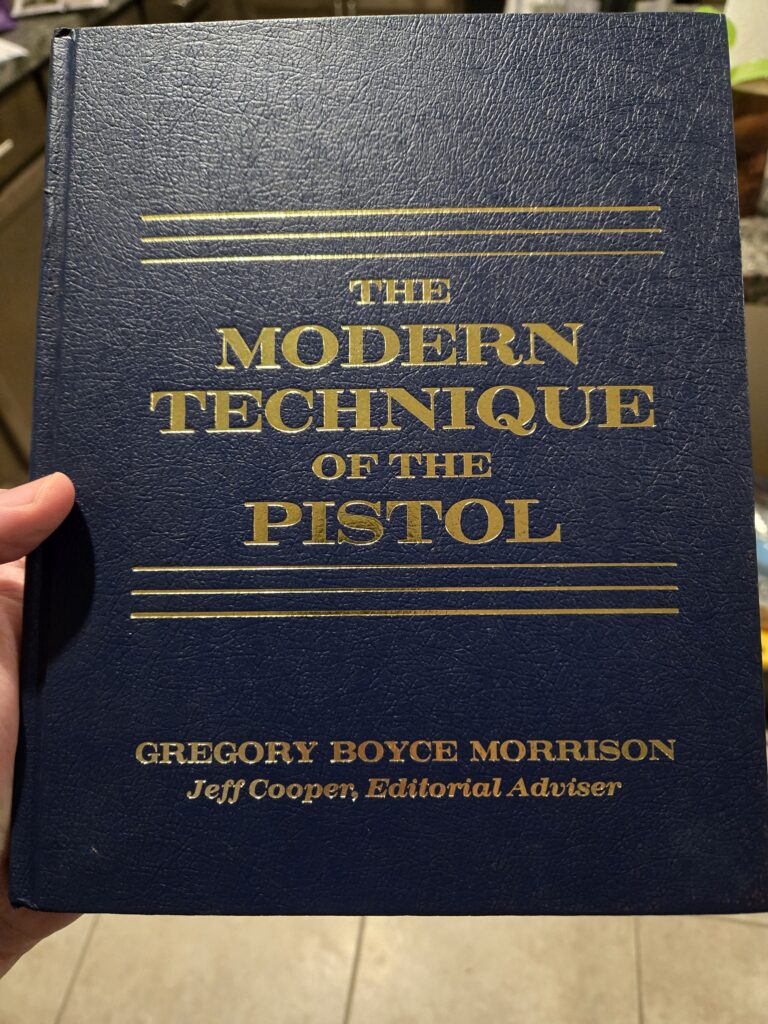
Before we can get into failures in Gun Handling and how to remedy them, we must first define Gun Handling. Colonel Cooper likely wasn’t the first person to coin the term “gunhandling”, but we will defer to his work within the Modern Technique for this purpose. In my research for this article, I picked up a copy of The Modern Technique of the Pistol, written by Gregory Boyce Morrison, with Jeff Cooper himself as the Editorial Advisor. Published in 1991, I consider this to be one of the definitive texts of the Modern Technique, and the Combat Triad from during the Colonel’s lifetime. Below is pulled directly from the introduction of the Gunhandling section of the book:
This section focuses on the second component of the Combat Triad–gunhandling. A broad subject, it encompasses safety principles, the basic skills of loading and unloading, magazine exchanges, the presentation and Guard Position, and malfunction clearances. Gunhandling compliments the firing of a shot, but it is not “shooting” in the strictest sense. Gunhandling provides the support skills crucial to a full exercise of the Modern Pistol Technique. Without practical gunhandling skills, on has only a part of the whole.
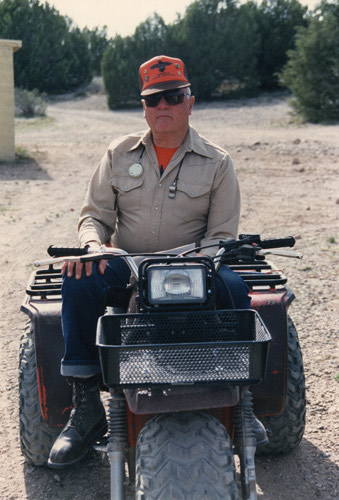
Col. Cooper on his trike.
Safety is one goal of gunhandling. Confidence in the operation of the defensive sidearm is another. It is not possible to address the idiosyncrasies of all pistols, and one need not become an expert on every model. However, one had best know his chosen sidearm–it’s operation, controls, the malfunctions that may be encountered, and its proper condition of readiness.
When reading The Modern Technique of the Pistol, it is exceptionally clear that both Morrison and Cooper found gun handling to be exceptionally important. One look at the index shows this immediately. There are 62 pages dedicated to gunhandling in this book, out of just over 150 total. For comparison, Mind-Set is given 22 pages, and Marksmanship only gets 10 pages. While each part of the Combat Triad is equally important, Gunhandling receives between three and six times the page count of its counterparts. As you read this section, you’ll see how in-depth the topic truly is. Unfortunately this also shows part of why these skills are so weak with many shooters. We should all strive to be like the Colonel, and give Gun Handling the attention it deserves.
Recent Failures of Gunhandling
Over some recent travels I made my way to two different shooting ranges, my old stomping grounds. While there I made a quick list of failures in Gunhandling that I saw. These issues occurred over less than two hours in total time. This is pretty representative of what I see from the general population of shooters, so while things may seem egregious, they certainly aren’t atypical.
Muzzling my wife and I repeatedly
Shooter unsure how to lock gun open to show clear
Confusing the safety and slide stop levers on a 1911 when trying to load and unload
Unfamiliar with loading and unloading processes of their pistol
Closing the slide on an open and empty gun, inserting the magazine, then racking the slide to load.
Poor fundamentals
Thumb behind slide, repeatedly bashing their thumb into the recoiling slide
Tea cup style grip, losing control of the gun under recoil
Difficulty identifying and rectifying stoppages
Inability to zero optics or irons, resulting in rounds hitting dramatically off their intended target
Unsafe drawing and holstering
Muzzling oneself, flagging bystanders, etc
Left handers swapping hands to load and unload with their right hand, increasing administrative gun handling and the potential for a negligent discharge
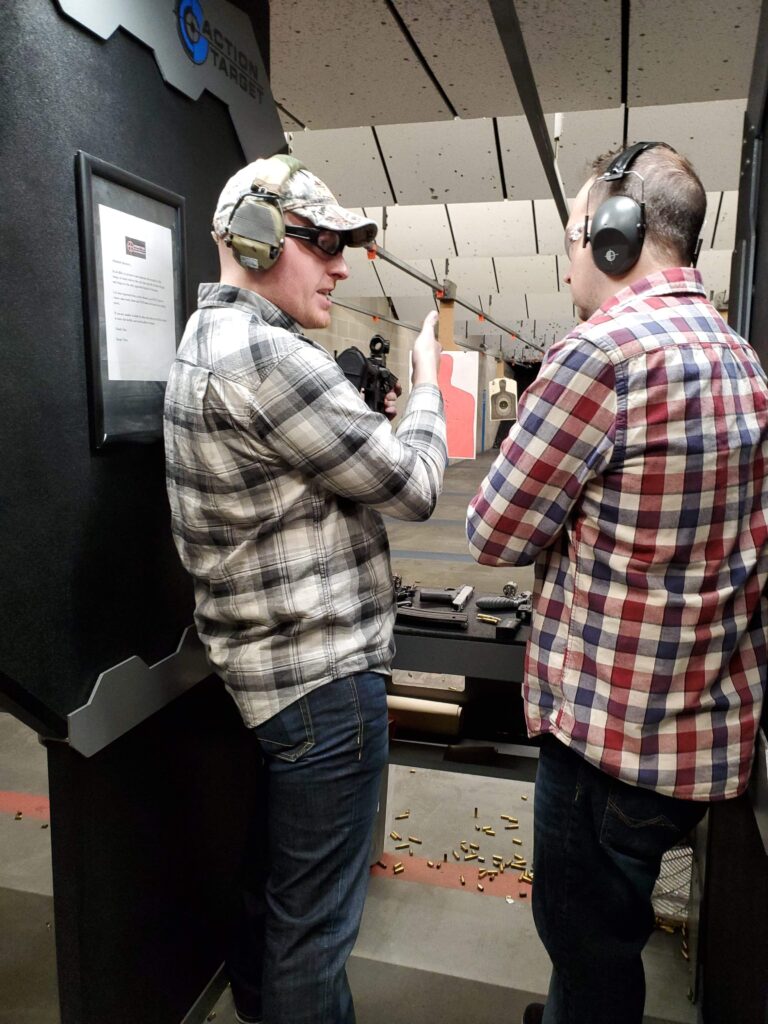
I teach with a new-shooter program fairly regularly, so I’m used to seeing some violations of the safety rules or shoddy gun handling. The difference here is that the above failures were not part of a beginner’s class, where people are there to learn. Rather it was on the regular range itself, with no instructors or safety officers to help correct individual shooters.
Sure, I can jump in to help people, and I do from time to time. However, some folks aren’t particularly receptive to a stranger coming in and correcting them, uninvited. Especially if that stranger isn’t a staff member or other person of authority. In some cases jumping in can make things worse, as particularly headstrong shooters double down on their bad habits in an effort to show you who’s boss.
How to Improve our Gunhandling
Now that we’ve defined Gunhandling and looked at some failures, how to we fix ourselves or those around us?
Be Intentional and Aware
First we must understand the seriousness of what we’re dealing with. Guns can be a lot of fun, and I’m not here to storm all over your sunny range day. That being said, it’s quite literally a matter of life and death each time we handle our firearms. Guns don’t kill people, but people who are unsafe with their guns just may. Don’t be lackadaisical when handling your guns, do it with intention and focus. Be aware of what surrounds you and your target. Be cognizant of how your body and clothing interacts with your firearms.
Safe gun handling is at the core of every interaction you have with a firearm, whether you intend to fire off a shot or not. Firearms demand respect, and the price to pay for failing to give them that respect is immense.
Educate Yourself
Next, seek education. None of this comes naturally, and none of it is instinctual. You didn’t come out of the womb with a gun in your hand, and you may not have ever seen one outside of TV before picking a firearm up for the first time. I shot my first real gun when I was six, but that doesn’t mean I knew anything about safe gunhandling. Much like driving a car, it’s going to take time and effort to learn how to safely and effectively use a gun. Find someone who offers classes in your area. The NRA, USCCA, and NSSF are good places to start, along with lessons from a local range or gun shop.
Instructor demonstrating proper prone technique in a Appleseed 25M course
You have a variety of resources available, including this one you’re reading right now! The more you learn the more confident, comfortable, and safe you’ll be over time. You’ll also likely make friends, and find new aspects of gun culture that you weren’t aware of before. From competitions to other courses, history, gear, and more, there’s a mind-boggling amount of material out there to help you grow. Safe gunhandling is at the core of each of these, and will be something that carries you along forever.
Get Involved
You’re not in this alone. With millions of guns in circulation, there are new people becoming gun owners every day. You may have a lot to learn, but you’re almost certainly farther along than someone in your community. Join the local club, volunteer at the range, or start discussion online. Once you’ve improved your own gunhandling, it’ll be easier to help those around you. Helping others is a great way to help ingrain lessons in your own mind. Teaching someone often improves our depth of understanding that simple study and practice cannot do. It may also show new methods or thought processes that weren’t immediately apparent for yourself.
Remember where you came from, and guide others to the path of righteousness with their own gunhandling.
Closing Thoughts on Gunhandling: The Oft Neglected Part of the Combat Triad
Treat your gunhandling with the respect, focus, and effort that it deserves. It may not excite you like pressing the trigger, and it may not get buzz like mindset, but it gunhandling is critical. These are the basics, and poor practices are the mark of an amateur. You don’t need to be an expert in Colonel Cooper’s teachings, or even a fan of them to work on your skills. While I find the history important and interesting, the focus here is really your abilities. Learn how your equipment works, be efficient, and stay safe.
Support My Work
If you made it this far, thanks for reading! Writing isn’t my full-time profession, and nearly everything I do comes out of my own pocket. Between ammunition, tuition, range fees and more, expenses add up fast. If you like what I have to offer, consider making a donation to my Patreon.
Every bit helps bring more work like this to you, and contributes to shortened timelines or more in-depth work on my part. You’ll also have more direct access to me, offering suggestions for future projects, looking behind the scenes, and getting early access to some content. You can find my Patreon >>HERE<<
Daniel holds instructor certifications from Rangemaster, Agile Training & Consulting, and the NRA. He has received training from Craig Douglas, Tom Givens, and Steve Fisher among others. He also has experience competing in USPSA, CAS, 3 Gun, and Steel Challenge. In his free time Daniel enjoys petting puppies and reading the Constitution.
His work is also published by Athlon Outdoors, AmmoLand, Recoil Concealment, Air Force Times, and other publications.
I host two local watch enthusiast meetups each month. We’re located in Salt Lake City, Utah, but we’ve hosted meetups all around northern Utah. Well, […]







3 Trackbacks / Pingbacks