

We previously spoke on managing students on and off the range, focusing maintaining custody of people. Today we are taking a more direct look at safety and wellbeing. This ranges from hydration to additional safety rules for class.
Safe Reholstering
The most dangerous thing we’ll do with a gun in our hand is putting it in the holster. I don’t know who coined the term, but it’s one I hear often in classes and competition. If you’ve seen someone holster their gun, you’ve probably seen someone do it dangerously. While this is considered by many to be a beginner skill, there a lot of folks who still haven’t figured out how to holster a gun safely. That’s a tragedy waiting to happen. When I teach, I almost always cover safe holstering techniques for both AIWB and strong-side positions. Even in an instructor-level course, this makes it into the curriculum.

I need everyone on the range to be safe, and they need to continue being safe once they leave class. If you’re an instructor and see someone doing anything less than safe, it needs to be corrected. That doesn’t mean to call them out in front of class necessarily. Instead you can insert a quick block of holster work before your next section. Get everyone on the same page, practicing with cleared guns after a demonstration from you. It may take time, and may not be exciting, but this is a critical, and often overlooked skill that needs reinforcing for everyone.
I first saw this receive focus from John Johnston of Citizens Defense Research. While there are other instructors who cover the material, I have yet to see someone do it better. I unashamedly use his techniques for my students, with credit.
Hydration
If you’ve known me for any amount of time, you probably know that I highly value proper hydration. If I really like you, I’ll give you the spiel about how many canteens you should drink per day. Drowning is about the only time I’d want to have less water. Over the years I’ve seen a number of folks become sick from improper hydration. This is no fun in our daily lives, but it can be a serious safety concern around firearms. At the very least you may miss out on training, at worst, you could put yourself or others into a dangerous situation. The Mayo Clinic recommends nearly four liters a day for adult males, and I know most never come close to that. I try to drink at least a gallon of water and Pedialyte mix during full days on the range.
Remember, hydration starts the day prior to your event. Don’t start behind the curve, you won’t catch up. Drink water, add electrolytes, and try to avoid sugary drinks.
Tweezers
Tweezers are a highly underrated tool to put in your range bag. Not the flimsy version that slides into your Swiss Army Knife, but real tweezers like you’d have in your medicine cabinet back home. These can be life savers on the range, especially when dealing with newer or more casual gun owners who aren’t of the “Embrace the Suck” mindset. I finally added a good set of tweezers to my range bag in late 2025 after an incident caused me to end a range session early.
Somehow, a tiny brass shaving found itself stuck in the front of the magazine that was currently loaded into my pistol. As I ejected the magazine from the holstered gun, I grasped it with my dominant hand to administratively top off before starting a course of fire. Suddenly, I get a sharp prick in the middle of the pad of my trigger finger. This was that aforementioned brass shaving, previously unseen. A tiny sliver of brass is stuck in my trigger finger, and hurts badly when pressure is applied. I try to use my pliers to remove the piece, but no luck, and a knife is out of the question with my trigger finger.
I pack up the range, head home, pull out tweezers to remove the brass, and all is well again. The next day I throw a pair in the range bag, just in case. This was well overdue, I can’t tell you how many splinters and metal shavings I’ve gotten stuck in my digits on range, not to mention those I’ve witnessed for other shooters. A basic set costs less than a fast food hamburger, or you can get fancy with a $35 pair from Victorinox. Either way, toss a pair in with your shooting gear, you won’t regret it.
The 5th Rule of Gun Safety
I, like many of you, abide by Colonel Cooper’s Four Rules of Gun Safety. They’re not range rules, but rules for life. However, there’s a fifth rule that I was introduced to by John Johnston of Citizen’s Defense Research back in 2019. It may be non-traditional, but I think it deserves a spot in the Pantheon. Rule five simply states “No unauthorized gun handling.” This isn’t the academic language of the Colonel, but I don’t think it needs to be. It is clear cut, with no room for “if”, “and”, or “but”.
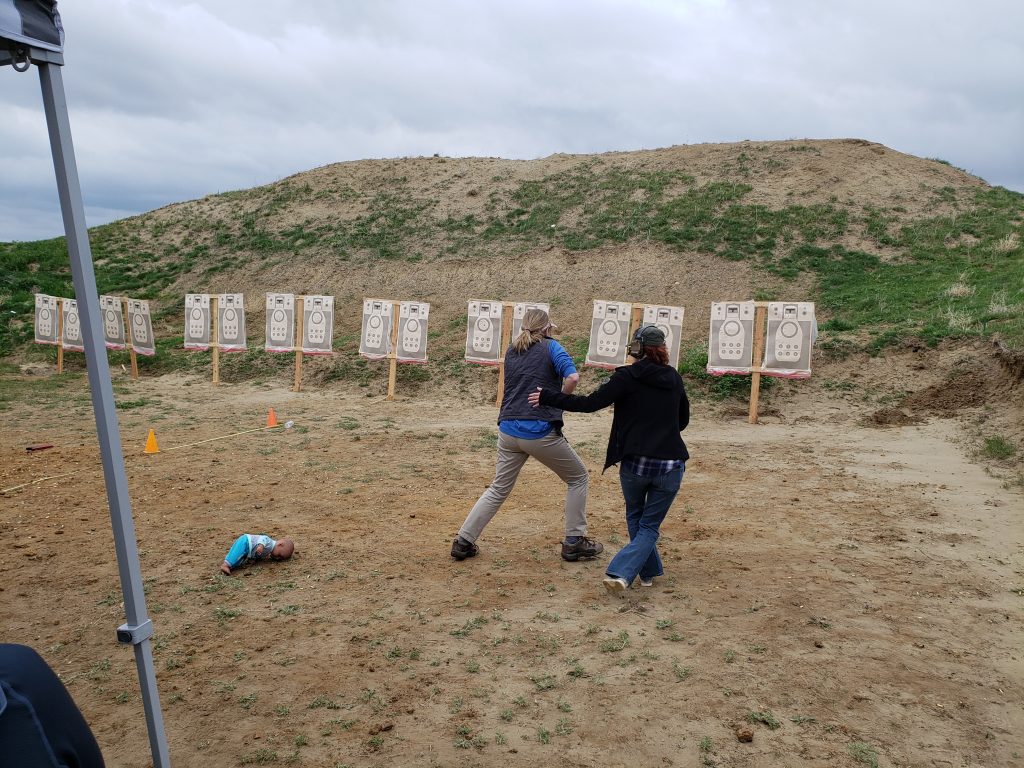
We see too many people fiddling with their firearms at inappropriate times, both on and off the firing line. Someone pulls their pistol to check their optic, or wants to show their rifle to a friend. Brains are turned off, but the “on” switch for their loaded gun sits ready for action, with the likelihood of other rule violations–and tragedy–growing by the second.
First Hand Experience
One of my more recent experiences that brought Rule 5 to the forefront of my mind was during a carbine class in early 2025. Frequently, students and assistant instructors would show off their guns in the parking lot of our hot range. At nearly every break I saw someone handing another person a loaded gun between cars, well behind the firing line, as students milled about. It’s a miracle that nobody ND’d into a car, berm, or fellow student. This, along with many other reasons, led to me walking out of that class early, eager to maintain the same number of holes I arrived with.
While abiding by “No unauthorized gun handling” will not complete eliminate risk, it does seriously reduce risk. Make very clear what a violation results in, whether that be ejection from class, the replacement of their firearm with a dummy gun, or otherwise. If someone mistakenly thought they were given a command to draw or fire, rectify whatever caused confusion and use the totality of your circumstances to make a judgement call. This is a rule for everyone, but it is up to you to decide how it is enforced.
Closing Thoughts on Instructor Tips | Safety and Wellbeing on the Range
Tweezers and water aren’t the most exciting things to read, nor is safe holstering. However, it’s things like these that can make a big difference for your students. Keep them feeling good and healthy. Keep them safe. It’s small things such as these that help set reputable instructors apart from the crowd. Take safety and wellbeing seriously, and you’ll keep them around for a long time.
Support My Work
If you made it this far, thanks for reading! Writing isn’t my full-time profession, and nearly everything I do comes out of my own pocket. Between ammunition, tuition, range fees and more, expenses add up fast. If you like what I have to offer, consider making a donation to my Patreon.
Every bit helps bring more work like this to you, and contributes to shortened timelines or more in-depth work on my part. You’ll also have more direct access to me, offering suggestions for future projects, looking behind the scenes, and getting early access to some content. You can find my Patreon >>HERE<<



1 Trackback / Pingback